August 7, 2026
Exposed fastener metal roofing is a practical and affordable option for many homes, barns, garages, and commercial buildings. The panels are secured directly through the metal with screws that remain visible after installation. When the system is installed correctly, the fasteners, washers, seams, flashing, and panel placement work together to keep water out and withstand changing weather conditions. However, even small installation mistakes can create serious weaknesses that may not become obvious until months or years later. Poor screw placement, excessive tightening, inadequate overlap, and improper flashing can allow moisture to enter, reduce the roof's service life, and lead to costly interior damage. Experienced contractors understand that exposed fastener systems require precision because every screw can become an entry point when installed improperly.
Allowing Water to Enter Through Fasteners
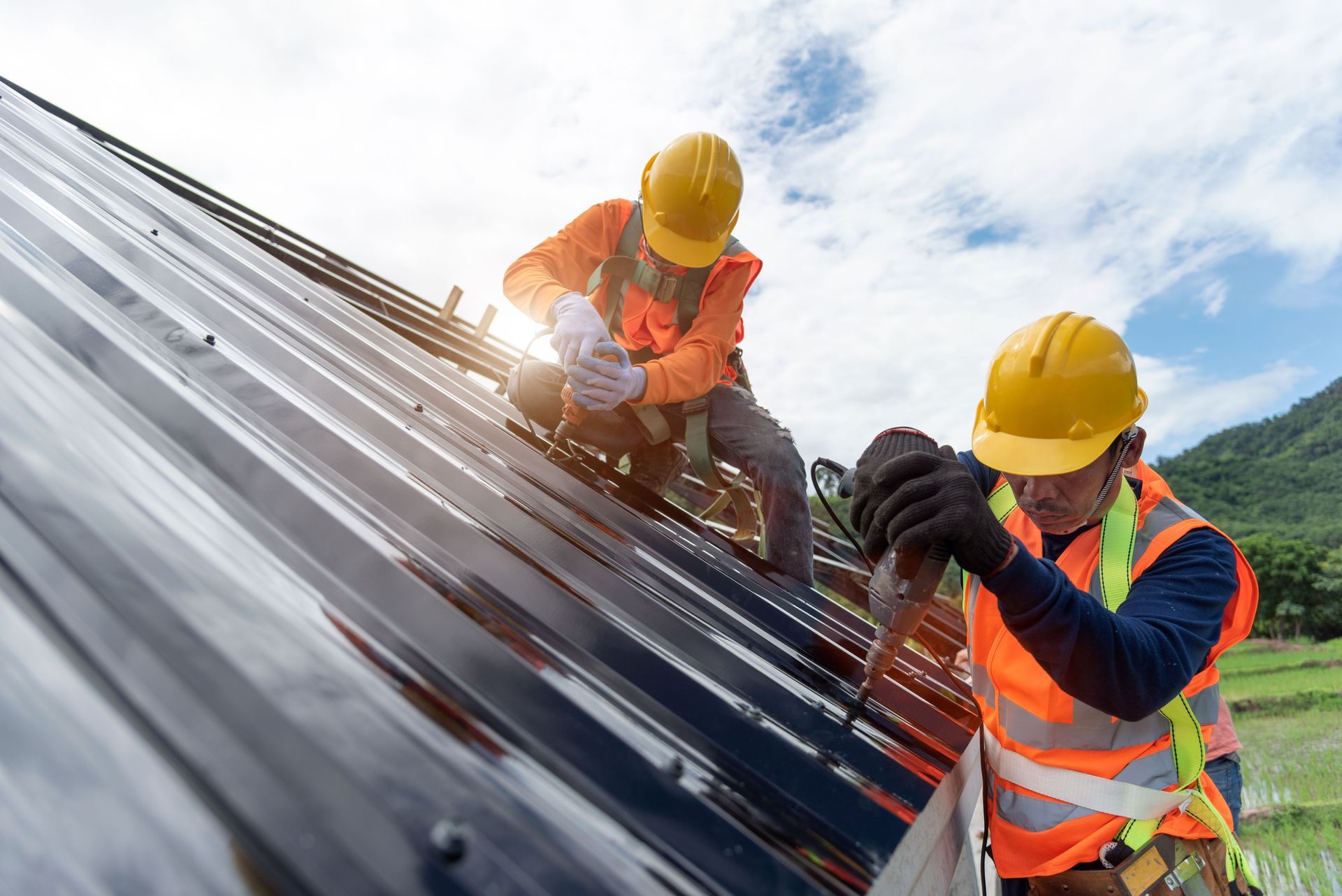
Every exposed screw penetrates the metal panel and the material beneath it, which means the sealing washer around the fastener must create a dependable barrier. If a screw is driven at an angle, placed outside the correct fastening line, or installed with a damaged washer, water can travel around the opening. A leak may begin slowly, and moisture can spread along the decking before becoming visible indoors. By the time a ceiling stain appears, insulation, sheathing, or framing may already have absorbed water.
Improper tightening creates another common risk. A screw that is too loose may leave a gap beneath the washer, while a screw that is overtightened can crush or split the washer and distort the surrounding panel. Both conditions weaken the seal. Skilled roofers use the correct tools and pressure to seat each fastener firmly without damaging the gasket. They also follow the manufacturer's fastening pattern because placing screws in the wrong part of the panel can increase movement and make leaks more likely.
Creating Weaknesses Through Poor Panel Alignment
Metal panels must be positioned squarely and aligned consistently from the beginning of the installation. When the first panels are crooked, the error often becomes more pronounced as additional panels are added. Misalignment can create uneven overhangs, distorted seams, and gaps where panels should overlap. Installers may attempt to force later panels into position, placing stress on the metal and the fasteners. These adjustments can reduce water shedding and leave the finished surface uneven.
Incorrect panel alignment can also interfere with ridge caps, eave trim, rake trim, and flashing around roof penetrations. These components are designed to fit specific panel profiles and dimensions. If the panels are shifted or stretched out of position, trim pieces may not sit flat or seal correctly. Qualified roofers carefully measure the roof, establish straight reference lines, and check alignment repeatedly throughout the project. This attention prevents small layout mistakes from developing into widespread installation problems.
Increasing Damage From Thermal Movement
Metal expands as temperatures rise and contracts as temperatures fall. Exposed fastener roofing systems are designed to accommodate this movement, but installation errors can restrict the panels or place excessive stress on individual screws. Fasteners driven too tightly may prevent normal movement, while incorrect spacing can concentrate pressure in certain areas. Over time, repeated expansion and contraction can enlarge screw holes, loosen fasteners, deform panels, or wear down sealing washers. These changes often create leaks even if the roof initially appeared secure.
Panel length and attachment methods also affect thermal movement. Long panels experience more expansion than short ones, so installers must follow product-specific requirements for spacing, fastening, and placement. Using the wrong screws or fastening panels through inappropriate locations can make the system less flexible. Experienced roofers account for local temperature changes and manufacturer specifications before installation begins. Their planning helps the metal move without damaging the roof assembly.
Trapping Moisture Beneath the Metal Panels
A metal roof needs a properly prepared surface beneath the panels. Installing roofing over damp decking, deteriorated sheathing, or unsuitable underlayment can trap moisture where it cannot dry easily. Condensation may also develop beneath the metal when warm, humid indoor air meets a cold roof surface. Without appropriate ventilation, insulation, and moisture control, this condensation can collect on the underside of the panels and drip onto the roof deck. The result may resemble an exterior leak even though the moisture originates inside the building.
Trapped moisture can contribute to mold growth, wood decay, corrosion, and reduced insulation performance. It may damage ceilings and walls before the cause is identified. Professional roofers inspect the decking and supporting structure before covering them, replace weakened materials, and use underlayment suited to the roof design and climate. They also evaluate ventilation conditions to reduce condensation risks. Skipping these preparation steps can leave serious problems hidden beneath an attractive metal surface.
Reducing Protection Around Roof Penetrations
Chimneys, plumbing vents, skylights, valleys, walls, and other roof transitions require carefully shaped flashing. These locations interrupt the smooth flow of water and are naturally more vulnerable to leakage. Poorly installed flashing may be cut too short, placed beneath the wrong layer, secured with excessive fasteners, or sealed primarily with caulk instead of proper metal components. Sealant can be useful, but it should not replace a correctly designed flashing system. As it ages, cracks, gaps, and separation can expose the underlying installation error.
Water entering near a penetration can travel along rafters or decking and appear far from its source. This makes diagnosis difficult and may lead to repeated repairs that address only the visible symptom. Trained roofers understand how to integrate flashing with panel ribs, underlayment, closures, and trim. They shape and overlap materials so gravity directs water away from vulnerable joints. Correct flashing requires skill, particularly on roofs with several penetrations.
Shortening the Roof's Expected Service Life
Metal roofing is often chosen because of its durability, but the material alone does not guarantee long-term performance. According to This Old House, although copper is usually the costliest metal roofing material, it can remain in service for 100–200 years or more when properly maintained. Even premium metal can fail early when installation leaves the system vulnerable to water, movement, corrosion, or wind. Exposed fastener panels can provide dependable service only when installed according to the manufacturer's instructions.
Poor workmanship may void product warranties or create damage that is excluded from coverage. Manufacturers typically specify approved fasteners, screw locations, panel overlaps, underlayment, trim details, and installation conditions. Deviating from these requirements can shift repair costs to the property owner. Reputable roofers document their work, use compatible materials, and follow published guidelines. Proper installation protects both the physical roof and the owner's ability to pursue warranty assistance if a genuine material defect develops.
Raising the Cost of Future Repairs
Installation defects rarely remain isolated. A small leak around one screw can damage decking, insulation, drywall, paint, and personal belongings. Loose panels may vibrate in strong winds, causing nearby fasteners to weaken and seams to separate. Corrosion can spread from scratched coatings or incompatible metals, while repeated moisture exposure can deteriorate structural components. What begins as a minor fastening mistake may eventually require extensive repairs inside and outside the building.
Correcting poor installation can be more complicated than repairing ordinary wear. Contractors may need to remove panels, replace damaged decking, install new underlayment, rebuild flashing, and refasten large sections of the roof. In severe cases, replacement may be more practical than repeated repairs. Knowledgeable roofers can inspect the system, identify patterns of improper installation, and explain which corrections are necessary. Addressing these problems early can limit damage and help property owners avoid larger expenses.
Exposed fastener metal roofing can provide reliable protection, but it depends on accurate panel placement, properly seated screws, suitable underlayment, effective flashing, and careful planning for thermal movement. Poor installation turns ordinary fasteners, seams, and penetrations into potential leak points that may damage the roof deck, insulation, framing, and interior finishes. It can also shorten the system's life, complicate warranty claims, and increase the cost of future repairs. Property owners should have questionable workmanship evaluated by experienced roofers before small problems spread throughout the structure. For professional installation, inspection, or repair of an exposed fastener metal roof, contact Consolidated Roofing Contractors, Inc.